Grip Strength and Wrist Stability: Exercises Every Athlete Needs
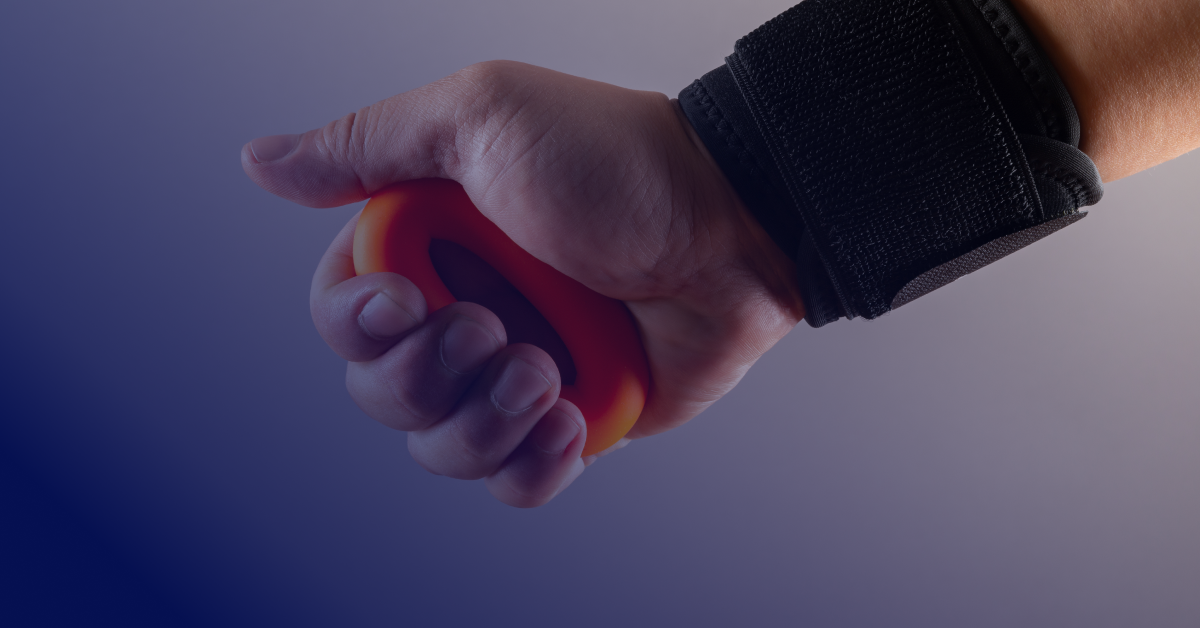
Athletes often spend considerable time training their legs, core, shoulders, and cardiovascular endurance. The hands, wrists, and forearms may receive much less attention until pain or weakness begins affecting performance.
Grip strength and wrist stability matter in more sports than many athletes realize. Tennis players need to control the racket through acceleration and impact. Golfers rely on the hands and wrists to transfer force through the club. Climbers, gymnasts, baseball players, weightlifters, and contact-sport athletes all place different demands on the same relatively small area of the body. Grip strength is also one of the most-studied markers of overall strength and health in the research literature. [1]
Strong grip muscles alone are not enough. The wrist also needs mobility, coordination, endurance, and the ability to remain controlled while force travels through the hand. The right exercises can help athletes build that foundation — but wrist training should be gradual and specific to the sport. [2]
What Is Grip Strength?
Grip strength refers to the force created by the muscles of the hand and forearm when you hold, squeeze, pinch, or control an object. There are several types of grip. Crushing grip closes the fingers around an object — a racket handle, barbell, baseball bat, or climbing hold. Pinch grip involves the thumb and fingers — gripping a weight plate, controlling a ball, or holding a smaller object. Support grip holds an object over time — carries, pull-ups, rowing, climbing, and weightlifting.
Maximum force is only one part of grip performance. Athletes also need endurance and the ability to adjust their grip without creating unnecessary tension through the forearm.
What Is Wrist Stability?
Wrist stability is the ability to keep the joint controlled while it moves or accepts force. A stable wrist is not completely rigid — it moves through the range required for the sport while the muscles and ligaments keep the small wrist bones aligned. [3]
Stability is important when catching or throwing a ball, absorbing force during a fall, holding a racket or club, supporting body weight through the hands, lifting a barbell or dumbbell, blocking or making contact, and changing the angle of the hand quickly. An athlete may have strong fingers but still lack wrist stability — which leads to poor control, early fatigue, or compensation at the elbow and shoulder. [4]
Why Athletes Need More Than Squeezing Exercises
Grip trainers and stress balls strengthen the muscles that close the hand. They do not train every movement the wrist needs. A complete program should address wrist flexion, wrist extension, forearm rotation, side-to-side wrist control, finger opening, grip endurance, weight-bearing stability, and sport-specific force control. [2]
Training only the gripping muscles can create an imbalance between the muscles that close and open the hand. Athletes also need the wrist extensors, finger extensors, and forearm rotators to work efficiently — chronic overload of the extensor tendons is a well-documented source of forearm and elbow pain in athletes. [4]
Before Beginning Wrist Strengthening
SAFETY SCREEN — these exercises are general conditioning, not a substitute for evaluation after an injury. Do NOT begin strengthening without medical guidance if you have:
- Wrist pain after a fall
- Significant swelling or bruising
- Numbness or tingling
- A visible deformity
- Pain directly over a bone
- Clicking with pain or instability
- A recent fracture, surgery, or ligament injury
Several of these are signs of injuries that mimic simple overuse — learn more in our companion article, When Wrist Pain Is More Than Just Tendinitis.
During exercise, use a light resistance and move slowly. Muscle fatigue is expected. Sharp pain, increasing joint pain, numbness, or tingling are signs to stop.
Grip Strength and Wrist Stability Exercises for Athletes
The right resistance depends on your sport, injury history, and current ability. Begin with control rather than maximum weight. [2]
Coaching Points
1. Isometric grip squeeze
Exercise: Hold a soft ball, rolled towel, or therapy putty. Keep the wrist in a comfortable neutral position. Squeeze without bending the wrist; hold 3–5 seconds; relax slowly. Begin with 8–10 repetitions.
How to perform it: Firm but controlled pressure — avoid maximum effort every rep; it creates unnecessary fatigue and encourages the wrist to bend
2. Resisted wrist extension
Exercise: Forearm supported on a table or thigh, hand beyond the edge, palm down, holding a light dumbbell or band. Slowly lift the back of the hand toward the forearm; lower with control.
How to perform it: Keep the forearm still — movement comes from the wrist. Extensor endurance stabilizes the wrist while the fingers grip
3. Resisted wrist flexion
Exercise: Forearm supported, palm up, holding light resistance. Slowly bend the palm toward the forearm; pause; lower over 2–3 seconds.
How to perform it: No momentum; no more weight than you can control
4. Forearm pronation & supination
Exercise: Elbow bent, forearm supported, holding a light dumbbell or small hammer with the thumb pointing up. Rotate the palm slowly down, return, then rotate up.
How to perform it: Elbow close to the side. Hold the object near its center first — moving the hand farther from the weighted end increases difficulty without more weight
5. Radial & ulnar deviation
Exercise: Forearm resting, thumb facing upward, holding a light object. Move the wrist upward (thumb side), lower slowly; then the little-finger side within a comfortable range.
How to perform it: Do not twist the forearm or force the little-finger side into pain
6. Finger extension with a band
Exercise: Place a light elastic band around fingers and thumb. Begin with fingers together; slowly spread them apart; pause; return with control.
How to perform it: Balances repeated gripping and builds endurance in the hand’s smaller muscles
7. Wall weight shifts
Exercise: Stand facing a wall, palms on the wall at shoulder height, wrists comfortable. Slowly shift body weight side to side, then forward and backward.
How to perform it: Keep shoulders active; don’t collapse into the wrists. Progresses to countertop, hands-and-knees, plank, or sport-specific loading under PT guidance
8. Farmer’s carry, neutral wrist
Exercise: Hold a light dumbbell or kettlebell at your side, wrist straight. Stand tall, shoulder relaxed; walk slowly a short distance maintaining grip and wrist position.
How to perform it: Stop the set when the wrist begins bending or the shoulder compensates — the goal is alignment under load, not maximum weight
How Often Should Athletes Train the Wrists?
A general wrist and grip program may be performed two or three times per week: one or two sets of each exercise, 8–15 controlled repetitions, light-to-moderate resistance, and at least one recovery day between demanding sessions. [2]
Athletes who already place heavy stress on their hands may need less additional grip work. Climbers, gymnasts, rowers, and weightlifters perform substantial gripping during practice — their programs may need to focus more on endurance, finger extension, mobility, or recovery rather than adding maximum-strength work.
Match Wrist Training to the Sport
Racket & bat sports
- Grip endurance, forearm rotation, and control through rapid wrist movements.
Golf
- Controlled grip pressure, forearm rotation, and force transfer without overloading one wrist.
Climbing & gymnastics
- High grip endurance and body-weight support through the hands. Progression must be gradual — training volume is already high.
Weightlifting
- A neutral, stable wrist during pressing, pulling, and carrying. Technique becomes more important as resistance increases.
Contact sports
- Grip strength plus tolerance for unpredictable loading through the hand and wrist (football, hockey, wrestling).
Common Wrist Training Mistakes
Training only maximum grip. Constant maximum-effort squeezing creates fatigue without building the endurance needed for long practices and games.
Allowing the wrist to bend during lifts. A wrist that repeatedly collapses under resistance transfers stress to irritated structures. Reduce the weight and restore control before progressing.
Ignoring the opposite side. Both sides should be assessed — large differences in strength, endurance, or motion affect technique.
Progressing too quickly. Muscles may feel ready before tendons, ligaments, and joint structures have adapted to the workload. Increase resistance gradually. [4]
Exercising through numbness or sharp pain. These symptoms may indicate nerve compression or another condition requiring evaluation. Strengthening should never be used to test whether a possible injury will disappear.
How Physical Therapy Builds Sport-Specific Wrist Control
A physical therapist can determine whether an athlete needs more strength, mobility, endurance, coordination, or technique work. The evaluation may include grip and pinch strength, wrist range of motion, forearm strength, joint stability, sensation, upper-body mechanics, weight-bearing tolerance, and sport-specific movement. The therapist then builds a program that progresses from basic strengthening to the exact demands of the athlete’s sport. All Sports Physical Therapy provides individualized sports medicine and physical therapy services for athletes recovering from injuries or working to improve movement and performance.
Build Stronger Wrists Without Overtraining Them
Grip strength and wrist stability support better control during lifting, throwing, swinging, catching, and weight-bearing activity. The goal is not to make the forearms tired with endless squeezing — it is to develop balanced strength and control through every movement the athlete needs. Begin with light resistance, focus on alignment and slow movement, and progress only when exercises can be completed without pain or loss of technique. At All Sports Physical Therapy, our therapists create individualized conditioning and rehabilitation programs based on each athlete’s sport, injury history, and performance goals. Contact us to schedule an evaluation at one of our Manhattan locations.
FAQ'S
What are the best grip strength exercises for athletes?
A balanced set covers all wrist functions: isometric grip squeezes, resisted wrist extension and flexion, forearm pronation/supination, radial and ulnar deviation, banded finger extension, wall weight shifts, and farmer’s carries with a neutral wrist. Grip trainers alone only strengthen hand closing. The extension, rotation, and weight-bearing components are what build a wrist that holds up in sport. [2]
How often should I train grip and wrist strength?
Two or three sessions per week is enough for most athletes — one or two sets of 8–15 controlled repetitions with light-to-moderate resistance and at least one recovery day between demanding sessions. Athletes whose sports already load the hands heavily (climbing, gymnastics, rowing, lifting) often need less added grip volume and more balance work: finger extension, mobility, and recovery. [2]
Why does my wrist collapse or hurt when I lift weights?
A wrist that bends under the bar usually lacks extensor strength and stability relative to grip strength — the load is passing through a joint the surrounding muscles cannot control at that weight. Reduce the load, restore a neutral wrist position, and build resisted extension and weight-bearing control before progressing. Pain directly over a bone, clicking with instability, or pain after a fall should be evaluated before strengthening resumes. [3]
Can I do these exercises if my wrist already hurts?
Not without screening first — wrist pain after a fall, swelling, numbness or tingling, deformity, bone tenderness, or clicking with instability are signs to get evaluated before beginning any strengthening. Several serious wrist injuries mimic simple overuse, and a strengthening program that helps mild tendon irritation can aggravate an undiagnosed fracture or ligament injury. Muscle fatigue during exercise is expected; sharp pain, joint pain, or numbness are signs to stop. [3]
Does grip strength actually matter for performance?
Yes — grip strength contributes directly to racket control, bat speed, barbell security, climbing endurance, and tackling, and it is one of the most-studied markers of overall strength and health in the research literature. For athletes, endurance and control usually matter more than one-time maximum squeeze: the ability to maintain grip and wrist alignment deep into a match, round, or training session is what changes performance. [1]
Should wrist training be different for different sports?
Yes — a baseball player, gymnast, golfer, and powerlifter should not follow identical wrist programs, because each sport stresses different grips, ranges, and loading patterns. Racket sports need endurance and rotation control; golf needs controlled grip pressure and force transfer; climbing and gymnastics need body-weight support with careful volume management; lifting needs a neutral, stable wrist under load. A PT evaluation matches the program to the sport. [2]
Peer-Reviewed Clinical References
[1] Leong DP et al. Prognostic Value of Grip Strength: Findings From the PURE Study. Lancet. 2015. pubmed.ncbi.nlm.nih.gov/25982160
[2] AAOS. Wrist and Hand Conditioning Program. OrthoInfo. orthoinfo.aaos.org/en/recovery/wrist-and-hand-conditioning-program
[3] Palmer AK. Triangular Fibrocartilage Complex Lesions: A Classification. J Hand Surg Am. 1989. pubmed.ncbi.nlm.nih.gov/2769188
[4] Kraushaar BS, Nirschl RP. Tendinosis of the Elbow (Tennis Elbow): Clinical Features and Findings. J Bone Joint Surg Am. 1999. pubmed.ncbi.nlm.nih.gov/10199763