Rotator Cuff Rehab: A Timeline That Actually Sets You Up for Success
Physical Rehabilitation, Arm Injuries
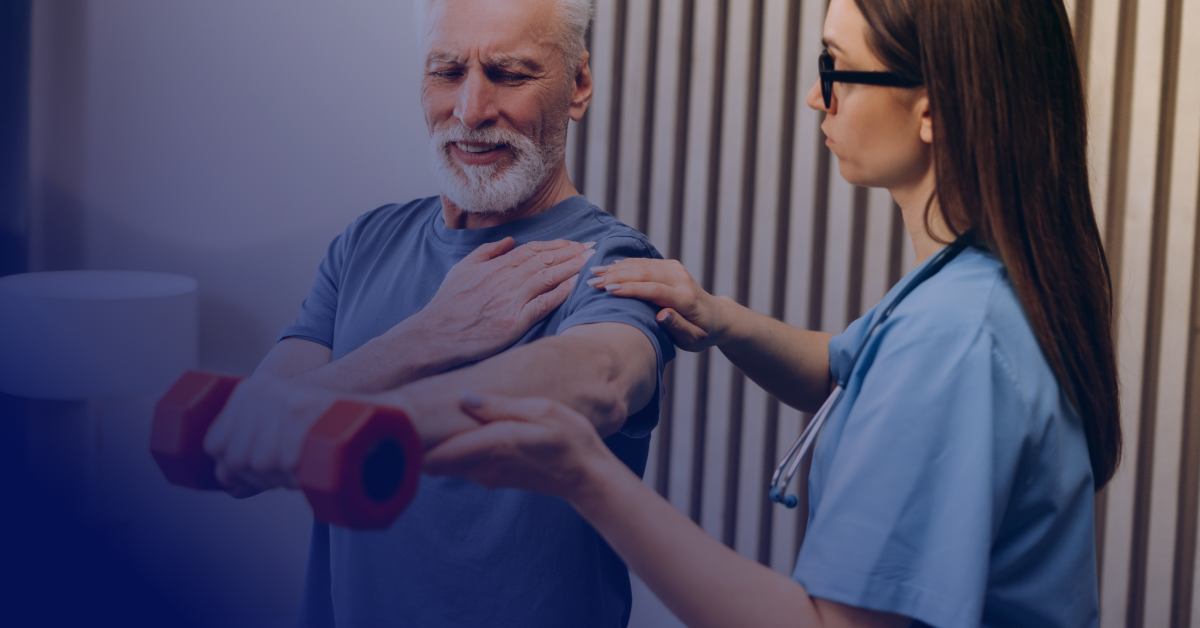
Rotator cuff surgery repairs the torn tendon, but the procedure itself is only the beginning. The shoulder still needs time to heal, regain motion, rebuild strength, and eventually tolerate everything you want to do with your arm again.
That recovery cannot be rushed into a standard six-week exercise program. The repaired tendon needs protection before it is ready for active movement and resistance. Physical therapy therefore progresses in stages, with each phase preparing the shoulder for what comes next. The timing can change based on the size of the tear, tissue quality, surgical procedure, and your surgeon's restrictions. AAOS notes that sling use, passive movement, active movement, and strengthening all progress according to the individual repair.
A rotator cuff rehab timeline gives you a general idea of what recovery may look like, but the calendar does not decide when your shoulder is ready to advance. Your surgeon and physical therapist will also consider pain, motion, strength, control, and how the repair is progressing.
Why Rotator Cuff Rehab Has to Move Slowly at First
One of the hardest parts of rotator cuff rehabilitation is that you may begin feeling better before the repaired tendon is ready to do very much.
During surgery, the torn tendon is reattached to the upper arm bone. Afterward, that repair needs time for biological healing to occur. This is why the first phase of rehabilitation focuses much more on protection than strengthening. AAOS notes that patients commonly use a sling and avoid actively using the operated arm for approximately four to six weeks, although the duration depends on the injury, tissue quality, and type of repair.
Research also shows why there is no reason to treat one postoperative protocol as correct for everyone. Reviews comparing earlier and delayed rehabilitation have found differences in short-term range of motion but much less consistent differences in longer-term function, reinforcing the need to balance mobility with protection of the healing tendon.
Your physical therapist's job during this period is not to see how quickly you can get back to normal. It is to help you maintain appropriate movement without asking the repair to handle loads it is not ready for.
The First 4 to 6 Weeks: Protect the Repair
Early recovery can feel surprisingly inactive compared with other forms of physical therapy. That is intentional.
Your arm will usually be protected in a sling, and your surgeon will determine how much shoulder movement is appropriate. Passive range-of-motion exercises may be introduced during this period. With passive movement, the shoulder is moved without the repaired rotator cuff actively lifting the arm on its own. AAOS states that passive exercise commonly begins within the first four to six weeks when the surgeon determines it is safe.
Physical therapy during this phase may focus on the motion your surgeon has approved while also helping you avoid unnecessary stiffness in surrounding areas. Your therapist may also review how to manage everyday movements without accidentally placing excessive stress on the shoulder.
The goal is not to stretch as far as possible. It is to protect the repair while gradually maintaining or restoring appropriate mobility.
This is also why following someone else's postoperative exercise routine can be a problem. A person with a small tear may have different restrictions from someone who had a large or multi-tendon repair. Online rehabilitation protocols also vary considerably in when motion and resistance are introduced.
Around Weeks 4 to 8: Begin Taking Back Control of the Arm
As healing progresses and your surgeon permits more movement, rehabilitation begins transitioning from primarily passive motion toward active movement.
AAOS describes active exercise beginning after approximately four to six weeks for many patients. At this stage, you begin moving the arm with your own muscles rather than having the therapist or your other arm do the work.
That sounds simple, but it can be a significant step after several weeks of protection. The shoulder muscles have been relatively inactive, movement may still feel stiff, and it is common for lifting the arm to feel awkward or weak.
Your physical therapist may work on gradually restoring shoulder elevation and rotation while watching how the shoulder blade and upper arm move together. The goal is controlled motion, not forcing the arm farther simply to reach a certain measurement.
You may still have restrictions on lifting and resistance during this stage. Being able to move your arm does not mean the tendon is ready to lift weights or return to normal overhead activity.
Around Weeks 8 to 12: Start Rebuilding Strength
Strengthening usually comes later than patients expect.
AAOS notes that strengthening exercises are commonly introduced around eight to twelve weeks after surgery. The exact starting point depends on the repair and your surgeon's protocol.
Early strengthening is generally controlled and progressive. Your therapist may begin with exercises designed to improve rotator cuff activation, shoulder-blade control, and the strength of the muscles surrounding the shoulder before adding greater resistance.
This phase is not about immediately returning to your old gym routine. The repaired tendon has spent weeks protected from meaningful load, so resistance needs to increase gradually.
A physical therapist also looks beyond the rotator cuff itself. The shoulder blade, upper back, trunk, and arm all contribute to how you reach, lift, push, pull, or perform an overhead movement. Rebuilding shoulder function means restoring coordination across that entire system rather than isolating one tendon.
Months 3 to 4: Strength Starts Becoming More Functional
By this stage, rehabilitation may begin feeling more like traditional strengthening, but progress still depends on what was repaired and how the shoulder is responding.
Exercises can gradually become more demanding as range of motion improves and the shoulder tolerates resistance. Your therapist may progress strengthening for the rotator cuff, shoulder blade muscles, upper back, and other muscles involved in the activities you need to return to.
The emphasis also begins shifting toward endurance. Completing an exercise a few times in the clinic is different from using your shoulder repeatedly throughout a workday, workout, or recreational activity.
This is where individualized rehabilitation becomes especially important. Someone whose goal is returning to desk work has very different demands from a painter who works overhead, a parent lifting a child, or a tennis player preparing to serve again.
ASPT's surgery rehabilitation services are designed to restore range of motion, strength, stability, balance, and endurance based on the patient's individual recovery needs.
Months 4 to 6: Work Toward Normal Shoulder Function
AAOS notes that many patients regain functional range of motion and adequate strength by approximately four to six months after rotator cuff surgery, although that does not mean every patient is finished with rehabilitation or cleared for every activity at that point.
By now, many everyday activities may feel considerably easier. Physical therapy can continue addressing strength differences, endurance, overhead control, or other limitations that are more noticeable during demanding tasks than during basic daily movement.
Your therapist may also begin making exercises more specific to your goals. That could include progressive lifting for work, higher-level strengthening for the gym, or movement patterns that prepare an athlete for eventual return to sport.
The important distinction is that functional daily use and full athletic or occupational readiness are not the same milestone. Higher-demand activities place much greater forces through the shoulder and usually require additional progression.
Months 6 to 9 and Beyond: Return to Higher-Level Activity
Later rehabilitation is less about basic healing and more about whether the shoulder is actually prepared for what you want to do.
Returning to heavier manual work or sports may require additional strength, endurance, range of motion, and sport-specific control. Reviews of return to activity after rotator cuff repair show that return timing varies substantially based on the type of activity and the demands placed on the shoulder.
Overhead sports are particularly demanding. A tennis serve, baseball throw, volleyball swing, or swimming stroke repeatedly places the shoulder through ranges and loads that ordinary daily activities do not reproduce. Return-to-play research after rotator cuff surgery also shows that time is frequently used as a criterion, but strength, range of motion, pain, and functional performance can all matter when determining readiness.
Your physical therapist may therefore introduce more advanced exercises, endurance work, and activity-specific progressions before you return to unrestricted performance.
The goal is not simply to reach month six, eight, or nine. It is to make sure your shoulder has recovered enough for what comes next.
Why Your Timeline May Be Different From Someone Else's
Two people can have rotator cuff surgery in the same week and follow different rehabilitation timelines.
The size of the tear matters. Tissue quality matters. A repair involving more than one tendon may need different protection than a smaller injury. Other procedures performed during the same surgery can also change postoperative restrictions. Reviews of rotator cuff rehabilitation protocols show substantial variation in the timing of motion and strengthening, including differences based on tear size.
Age, general health, previous shoulder function, and the activities you want to return to can also affect rehabilitation.
This is why your physical therapist should know exactly what was performed during surgery. The operative report and surgeon's protocol give the therapist information needed to develop a rehabilitation plan around the actual repair rather than treating every postoperative shoulder the same way.
Our companion New York Bone & Joint Specialists article, What to Expect From a Rotator Cuff Repair Surgery, explains what happens during the procedure and why the size and type of repair can affect recovery.
What Should Rotator Cuff Rehab Feel Like?
Rehabilitation should challenge the shoulder more as healing progresses, but more discomfort does not automatically mean a better workout.
Early in recovery, your therapist works within the restrictions established by the surgeon. Later, exercises become progressively more difficult as the shoulder demonstrates that it can tolerate additional movement and resistance.
Some muscle fatigue or soreness can occur as strengthening advances. Sharp pain, a sudden loss of function, or a significant increase in symptoms after progressing an exercise deserves attention rather than an attempt to push harder.
Your therapist will use your response to treatment to help decide when to progress, modify, or hold an exercise. A good rehabilitation plan moves forward, but it does not move forward blindly.
Common Mistakes That Can Slow Rotator Cuff Recovery
Doing too much because the shoulder feels better. Pain can improve before the tendon has healed enough for unrestricted lifting or overhead activity. Early restrictions protect the surgical repair, not just your comfort.
Doing too little once movement is allowed. Protection matters early, but appropriately timed rehabilitation is also important for restoring motion and function. Research comparing rehabilitation strategies shows that progression needs to balance tendon healing with the risk of unnecessary stiffness.
Starting strengthening on your own. Resistance exercise places load through the repaired tendon. AAOS generally places strengthening later in rehabilitation, commonly around eight to twelve weeks, depending on the repair.
Comparing your recovery with someone else's. Rotator cuff tears differ significantly in size, tendon involvement, tissue quality, and surgical treatment. Your coworker's or friend's timeline is not automatically yours.
Stopping rehab once daily activities feel normal. Everyday use may return before the shoulder has regained the strength and endurance required for heavier work, exercise, or sports. Return to higher-demand activity often occurs months after surgery and should reflect actual function.
Can You Speed Up Rotator Cuff Rehab?
You can support recovery, but trying to skip phases is not the same as speeding it up.
Research has compared earlier and delayed rehabilitation after rotator cuff repair, but it has not established one aggressive protocol as best for every patient. A 2024 meta-analysis found no clinically meaningful difference in shoulder function between early and delayed rehabilitation at six months and concluded that flexible progression based on clinical goals may be appropriate.
The better approach is to follow the restrictions for your repair, attend physical therapy, complete the exercises your therapist has prescribed, and progress when your shoulder is ready.
Consistency matters more than trying to win the recovery timeline.
What If Your Shoulder Seems to Stop Improving?
Recovery does not always progress in a perfectly straight line. Some phases move quickly while others take longer, especially as you transition from basic motion to strength or from general strengthening to higher-level activity.
Your physical therapist can reassess range of motion, strength, movement, and function if progress begins to stall. Sometimes the rehabilitation program simply needs to be adjusted. In other situations, persistent or worsening symptoms may warrant another evaluation by your surgeon.
Talk with your surgical or rehabilitation team if you experience a significant increase in pain, a new loss of motion or strength, new neurologic symptoms, or another major change after the shoulder had been progressing.
Physical therapy should stay coordinated with the surgeon when recovery does not follow the expected course.
Physical Therapy Is Part of the Repair
Rotator cuff recovery takes patience because healing and rehabilitation have to happen in the right order. The first weeks protect the tendon. The next stages restore movement. Strengthening follows, and only later does the shoulder begin preparing for heavier work, exercise, or sports.
There is no advantage to getting ahead of a timeline if your shoulder is not ready for the next phase. A successful program progresses based on both the surgical repair and what you can safely do.
At All Sports Physical Therapy, our therapists provide postoperative rehabilitation for shoulder and other orthopedic surgeries, with individualized treatment designed to restore motion, strength, stability, and endurance.
If you are preparing for rotator cuff surgery or are already working through recovery, schedule an appointment to develop a rehabilitation program based on your procedure and goals.
FAQ'S
How long is physical therapy after rotator cuff surgery?
Rotator cuff rehabilitation typically lasts several months, although the amount of supervised physical therapy varies by patient. AAOS notes that many patients regain functional range of motion and adequate strength by approximately four to six months, while higher-demand work and sports may take longer. Your rehabilitation timeline depends on the size of the tear, surgical repair, recovery progress, and activities you need to return to.
When does physical therapy start after rotator cuff surgery?
Rehabilitation begins with protection of the repair, and passive movement may be introduced during the first four to six weeks when the surgeon determines it is safe. The exact timing depends on the injury, tissue quality, and type of repair.
When can I move my arm on my own after rotator cuff surgery?
AAOS states that active exercise commonly begins after approximately four to six weeks for many patients, but this should only happen according to your surgeon's postoperative protocol. Larger or more complex repairs may follow a different progression.
When does strengthening start after rotator cuff repair?
Strengthening is commonly introduced around eight to twelve weeks after surgery, according to AAOS. This is a general range rather than a universal starting date, and your surgeon and therapist may progress more slowly depending on the repair.
Why can't I strengthen my shoulder sooner if it doesn't hurt?
Pain relief does not mean the repaired tendon has completed healing to the bone. Strengthening places greater load through the rotator cuff, so it is introduced later to protect the repair during early healing.
When can I return to the gym after rotator cuff surgery?
There is no single return date for every gym activity. Lower-demand activities may return earlier, while pressing, pulling, heavy lifting, and overhead exercise generally require later strength and functional progression. Your surgeon and physical therapist should determine when specific exercises can safely be reintroduced based on your repair and recovery.
When can I return to sports after rotator cuff surgery?
Return to sports is measured in months and varies with the sport, tear, repair, strength, motion, and functional recovery. Higher-demand and overhead sports can require a longer progression than normal daily activities. Return-to-play literature also shows that criteria vary considerably rather than relying on one universal clearance date.
What happens if I'm recovering more slowly than the timeline?
A slower progression does not automatically mean the surgery has failed. Rotator cuff rehabilitation varies based on tear size, tissue quality, procedure, and individual recovery. Your therapist can reassess your motion, strength, and function and coordinate with your surgeon if progress is significantly different from what is expected.
Peer-Reviewed Clinical References
[1] Sgroi TA, Cilenti M. Rotator Cuff Repair: Post-Operative Rehabilitation Concepts. Current Reviews in Musculoskeletal Medicine. 2018. The review describes evidence- and criteria-based rehabilitation following rotator cuff repair.
[2] Chen Y, et al. The Effect of Rehabilitation Time on Functional Recovery After Arthroscopic Rotator Cuff Surgery: A Meta-Analysis. 2024. The analysis found no clinically meaningful difference in functional recovery between early and delayed rehabilitation and supports flexible progression based on clinical criteria.
[3] Khan AZ, et al. Rehabilitation and Return to Work and Sport After Rotator Cuff Repair. Current Reviews in Musculoskeletal Medicine. 2023. Reviews rehabilitation progression and return to occupational and athletic activity after repair.
[4] Bravi M, et al. Criteria for Return-to-Play After Rotator Cuff Surgery: A Systematic Review of the Literature. 2022. Reviews the criteria reported for return to unrestricted activity after rotator cuff surgery.
[5] American Academy of Orthopaedic Surgeons. Rotator Cuff Tears: Surgical Treatment Options. OrthoInfo. Provides current patient guidance on postoperative immobilization, passive and active movement, strengthening, and recovery.